For many adults with ADHD, the day-to-day can feel like a labyrinth of forgotten tasks, missed deadlines, and an overwhelming sense of 'where do I even start?' Executive function challenges – difficulties with planning, organization, task initiation, and working memory – are a hallmark of ADHD, making even seemingly simple routines feel like monumental efforts. Traditional to-do lists, while well-intentioned, often fall short, adding to the mental clutter rather than alleviating it.
But what if there was a way to bring calm, clarity, and consistent progress to your day, without adding to your screen time? This is where the power of visual routines for adults with ADHD comes into play. By transforming abstract tasks into concrete, easy-to-follow visual steps, individuals can bypass common hurdles and move forward with confidence. Sederor is designed to facilitate this, providing a structured yet flexible framework that reduces real-life friction, empowering you to take one clear next step without getting lost in an app.
The Unique Landscape of Adult ADHD and Daily Routines
Living with ADHD as an adult presents a distinct set of challenges that can impact everything from personal well-being to professional success. It's not a matter of willpower or intelligence, but rather a difference in how the brain processes information and regulates attention and action. Common struggles include:
- Task Initiation Paralysis: Knowing what needs to be done but struggling to start.
- Time Blindness: Difficulty accurately perceiving the passage of time, leading to lateness or underestimation of task duration.
- Overwhelm and Decision Fatigue: Too many choices or steps can lead to freezing up and doing nothing.
- Forgetfulness: Important steps or items are easily overlooked, even for familiar routines.
- Difficulty with Transitions: Moving from one task or activity to another can be jarring and inefficient.
- Inconsistent Follow-Through: Starting tasks with enthusiasm but struggling to complete them.
These challenges can lead to a cycle of frustration, self-criticism, and a sense of being perpetually behind. Traditional text-based lists often fail because they rely heavily on working memory and sustained attention – precisely the areas where adults with ADHD often experience difficulties. They require mental effort to decode, prioritize, and remember, adding to the cognitive load rather than reducing it.
Why Visual Routines Are a Game-Changer for Adults with ADHD

Visual routines offer a powerful alternative, leveraging the brain's natural ability to process images quickly and efficiently. For adults with ADHD, this can translate into significant improvements in daily functioning and overall well-being. Here's why:
Overcoming Task Initiation Paralysis
One of the biggest hurdles for adults with ADHD is simply starting a task. A visual routine breaks down a larger goal into small, manageable, and visually represented steps. Each image acts as a clear, unambiguous cue, signaling precisely what to do next. There's less mental debate, less ambiguity, and a clearer path to action. Seeing the first step laid out visually makes it easier to just begin.
Managing Transitions and Task Switching
Transitions between tasks or activities can be particularly challenging, often leading to distraction or getting stuck. Visual routines provide explicit markers for these shifts. For example, a visual sequence for a morning routine might show 'wake up' -> 'brush teeth' -> 'get dressed' -> 'eat breakfast'. Each image signals the completion of one step and the clear beginning of the next, making transitions smoother and reducing the likelihood of getting sidetracked.
Reducing Mental Load and Decision Fatigue
The constant need to remember, prioritize, and decide can be exhausting. Visual routines pre-define the sequence and content of tasks, removing the need for on-the-spot decision-making. This frees up valuable cognitive resources, reducing mental fatigue and allowing individuals to conserve energy for more complex thinking or creative pursuits. The routine tells you what to do, so you don't have to think about it as much.
Enhancing Time Awareness
Time blindness is a common experience for people with ADHD. Visual routines can help by providing a tangible representation of progress. As each step is completed and marked off, there's a clear visual indication of how much has been accomplished and what remains. This can improve the sense of time passing and help in pacing oneself through a routine.
Fostering Independence and Reducing Friction
When routines are clear and visually supported, individuals can navigate their day with greater autonomy. This reduces the need for external reminders or prompts from partners, family members, or colleagues, thereby reducing potential friction and conflict in relationships. It empowers the individual to take ownership of their tasks and routines, fostering a sense of accomplishment and self-efficacy.
The Sederor Approach: Visual Routines Without More Screen Time
At Sederor, we understand the paradox: while digital tools can be invaluable for creating structure, the goal is to live a more organized life outside the screen. Our platform is specifically designed to help adults with ADHD build and implement effective visual routines for adults with ADHD that reduce friction in real life, not keep you tethered to an app.
Here's how Sederor supports this unique approach:
- Intuitive Visual Routine Builder: Easily create step-by-step visual routines using a vast library of icons, custom images, or even photos. Each step is represented clearly, making it instantly understandable.
- Focus on Real-World Application: Sederor is designed for quick setup and management. Once your routine is created, it can be displayed prominently on a tablet, a dedicated screen, or even printed out and placed where the routine happens (e.g., a morning routine in the bathroom, a work routine at your desk). This minimizes active screen interaction during the routine itself.
- Customizable Task Flows: Whether it's a morning routine, a complex work project, household chores, or a self-care sequence, Sederor allows you to tailor routines to your specific needs and preferences.
- Shared Structure for Support: For couples, housemates, or those receiving professional support, Sederor enables shared access to routines. A partner can help set up a routine, or a coach can monitor progress and provide guidance, fostering collaboration without micromanagement.
- Motivating Rewards System: Incorporate small, achievable rewards into your routines to boost motivation and reinforce positive habits. This can be a powerful tool for task completion.
- Global Accessibility: With support for 28+ languages, Sederor ensures that clear visual communication is accessible to a diverse range of users.
- Start Free: Explore the benefits of visual routines with Sederor's free plan, allowing you to experience the difference firsthand.
The core insight is that Sederor should reduce friction in real life, not keep people inside an app. You use Sederor to create the clarity, and then you live the clarity. The app becomes the architect of your calm, not another source of distraction.
Implementing Visual Routines: Practical Tips for Adults with ADHD

Getting started with visual routines can transform your daily experience. Here are some practical tips to maximize their effectiveness:
- Start Small and Simple: Don't try to overhaul your entire life at once. Pick one routine that causes significant friction (e.g., morning routine, getting out the door, starting work) and focus on that first. Break it down into just 3-5 clear visual steps.
- Be Specific and Granular: Instead of "Clean Kitchen," break it down into "Clear counter," "Wipe surfaces," "Load dishwasher," "Sweep floor." Each step should be a single, actionable item that can be easily visualized.
- Personalize Your Visuals: Use images, icons, or even photos that resonate with you. If a stock icon for "brush teeth" doesn't quite click, take a photo of your own toothbrush. Personalization enhances recognition and engagement.
- Place Routines Strategically: Display your visual routine where it's most relevant. A morning routine might be on a tablet in the bathroom or kitchen. A work routine could be on a second monitor or printed near your workspace. The goal is easy, glanceable access without needing to open an app on your main device.
- Build in Breaks and Transitions: For longer routines, include visual cues for short breaks or transitions. This helps manage energy levels and prevents overwhelm.
- Review and Adjust Regularly: Routines are not static. Life changes, and so should your routines. Regularly review what's working and what isn't. Sederor makes it easy to edit and adapt your visual flows.
- Involve Support (If Applicable): If you have a partner, family member, or professional coach, involve them in the process. They can offer an objective perspective, help brainstorm steps, or simply provide encouragement. Sederor's shared structure feature is ideal for this collaboration.
Beyond Personal Use: Professional and Shared Support with Visual Routines
While highly effective for individual use, visual routines, particularly through a platform like Sederor, extend their benefits to broader support systems. This addresses our repurposing angles of "professional support" and "adult routines."
Professional Support for Adults with ADHD
Coaches, therapists, and executive function specialists working with adults with ADHD can leverage Sederor as a powerful tool. Instead of abstract discussions about organization, they can collaboratively build concrete, visual routines with their clients. This allows professionals to:
- Co-create actionable plans: Work with clients to break down complex goals into manageable visual steps.
- Monitor progress effectively: Clients can share their routines, allowing coaches to see what's being accomplished and identify areas for adjustment.
- Provide structured guidance: Offer clear, visual homework assignments that clients are more likely to initiate and complete.
- Teach executive function skills: Use visual routines as a practical framework to teach planning, sequencing, and task management skills in a tangible way.
This approach shifts the focus from theoretical advice to practical implementation, significantly enhancing the effectiveness of professional support.
Adult Routines for Couples and Shared Living Spaces
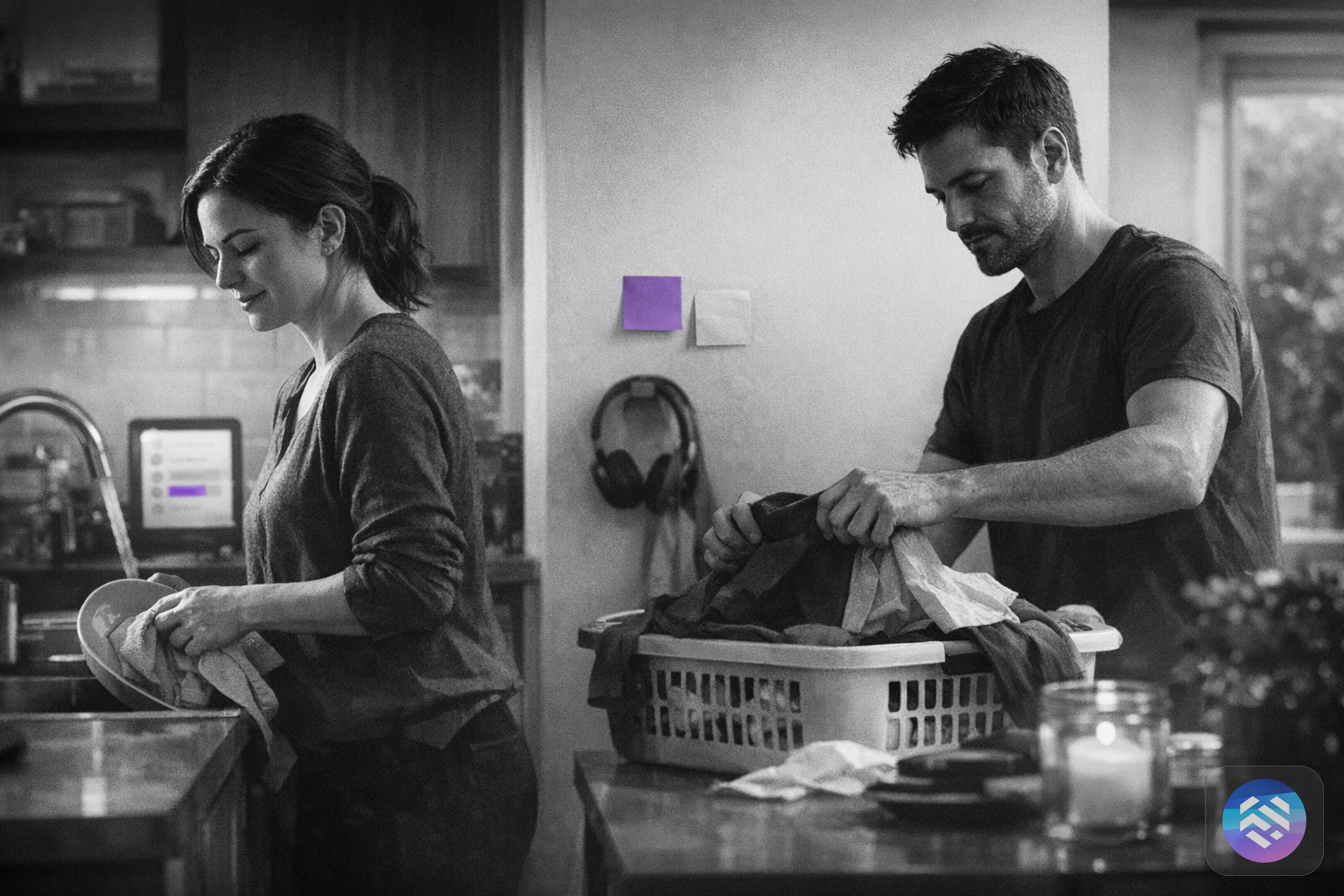
Many adults with ADHD live with partners, family members, or housemates. Differences in executive function can often lead to misunderstandings, frustration, and uneven distribution of household labor. Visual routines can be a powerful tool for creating harmony and shared responsibility.
- Clear Expectations: Visual chore charts or shared daily routines eliminate ambiguity about who does what and when.
- Reduced Conflict: When tasks are visually assigned and progress is clear, there's less room for arguments about forgotten responsibilities or perceived unfairness.
- Collaborative Problem-Solving: Couples can work together on Sederor to design routines that suit both their needs and preferences, fostering a sense of teamwork.
- Empowerment for All: The person with ADHD benefits from the structure, while partners benefit from reduced mental load and a more equitable division of tasks.
By providing a shared, visual blueprint for daily life, Sederor helps create a calmer, more predictable, and more supportive environment for everyone involved.
Frequently Asked Questions (FAQ)
Q1: Are visual routines only for children? I'm an adult, and I feel like this might be too simplistic.
A1: Absolutely not! While visual routines are often used with children, they are incredibly effective for adults with ADHD and anyone who benefits from clear, visual structure. The adult brain, regardless of neurotype, processes images faster than text. For adults with ADHD, who often struggle with executive functions like task initiation, working memory, and time management, visual cues can bypass these hurdles, making tasks feel less overwhelming and more achievable. Sederor's customizable nature allows you to create sophisticated, adult-oriented routines for work, personal goals, and daily living.
Q2: How does Sederor help reduce screen time if it's an app?
A2: Sederor's core philosophy is to reduce friction in real life, not keep you glued to a screen. You use the Sederor app to create and manage your visual routines efficiently. Once a routine is built, you have several options for how to use it in your daily life that minimize active screen interaction. You can display a routine on a dedicated tablet in a central location (like the kitchen or bathroom), print it out, or quickly glance at your phone for the next step without needing to scroll or interact extensively. The goal is to provide a clear visual cue for one clear next step, allowing you to focus on the task at hand in the real world, not on the app itself.
Q3: Can Sederor be used for work-related tasks and professional goals?
A3: Yes, definitely! Sederor is highly versatile and can be adapted for any type of routine, including complex work-related tasks and professional goals. You can create visual workflows for project management, daily task lists, meeting preparation, client follow-ups, or even breaking down a large report into manageable sections. By visualizing each step, you can improve focus, reduce procrastination, and ensure important details aren't missed, making it an invaluable tool for professional support and productivity.
Q4: What if my routines change frequently? Is Sederor flexible enough to adapt?
A4: Sederor is designed with flexibility in mind. We understand that life is dynamic, and routines often need to be adjusted. The platform makes it easy to edit, reorder, add, or remove steps from your visual routines quickly. You can also create multiple routines for different scenarios (e.g., a weekday morning routine, a weekend morning routine, a specific project routine) and switch between them as needed. This adaptability ensures that your visual support system remains relevant and effective, no matter how your schedule evolves.
Q5: How can a partner or professional support someone using Sederor?
A5: Sederor offers features that facilitate shared structure and support. A partner, family member, or professional coach can be invited to collaborate on routines. This means they can help design, review, and even track progress on shared or individual routines. For example, a coach can help a client break down a large goal into visual steps, or a partner can help set up a household chore routine. This collaborative approach reduces the burden on the individual, provides external accountability (if desired), and fosters a supportive environment without resorting to nagging or micromanagement.
Embrace Clarity and Calm with Visual Routines
Navigating life with ADHD doesn't have to be a constant struggle against disorganization and overwhelm. Visual routines for adults with ADHD offer a powerful, empathetic, and highly effective strategy to bring structure, clarity, and calm to your daily life. By providing one clear next step, they empower you to move forward with confidence, reduce mental friction, and reclaim your time and energy.
Sederor is here to be your partner in building these life-changing routines. It's a tool designed to support your independence, enhance your focus, and help you thrive in the real world, minimizing screen time while maximizing real-life progress.
Ready to experience the clarity and calm that visual routines can bring?
Sign up for Sederor today and start building your personalized visual routines!